Finding The Secret Key To Healing Part 2

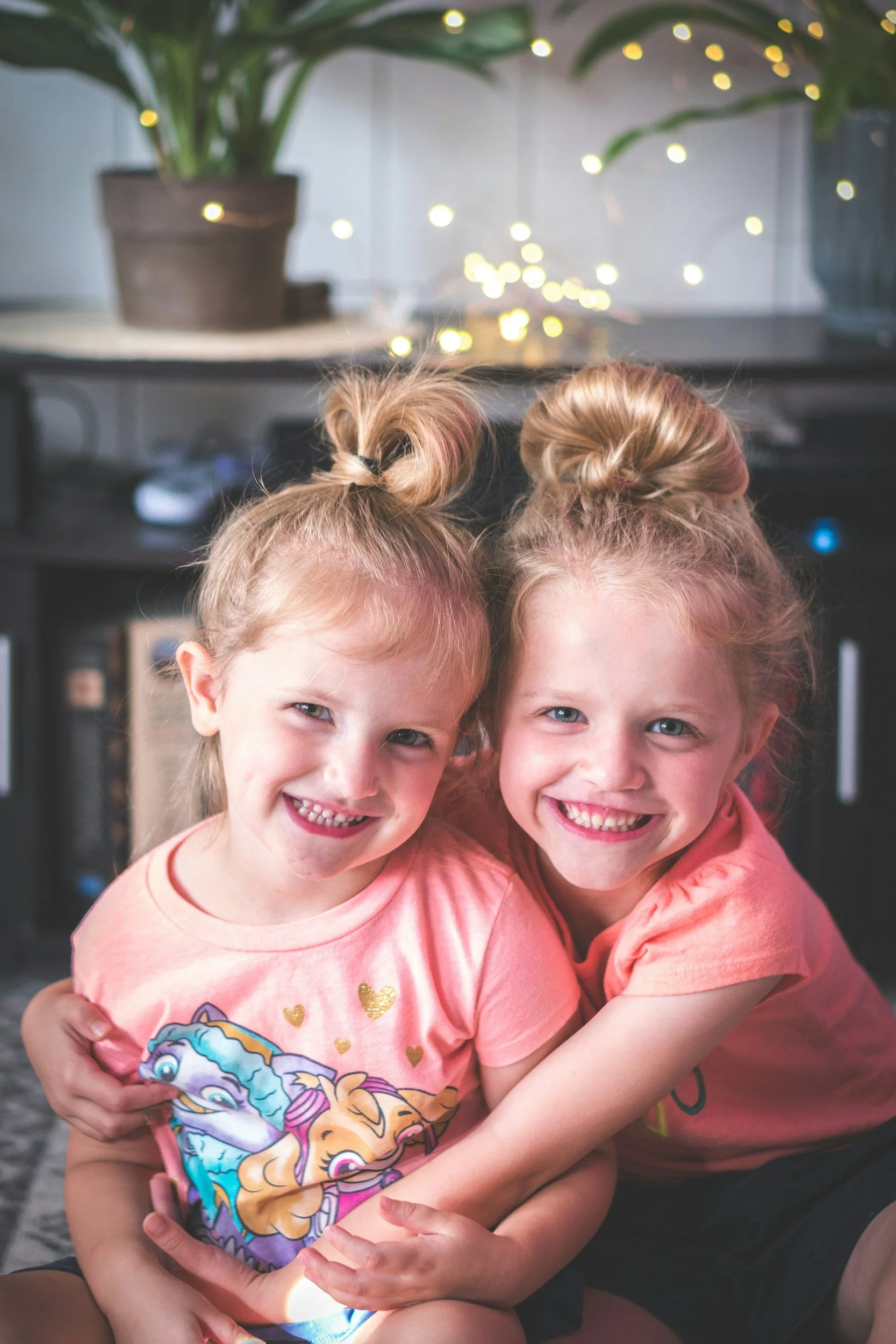
In "Part 1" of this article we discussed the idea that children may be examples of some of the world's greatest self-healers -- especially in light of their innate and brilliant ability to deal with the upsets that arise in their daily lives. Somehow, despite the tremendously challenging circumstances they encounter day-to-day, they manage to quickly release virtually all of their emotional burdens, finding their way back to their natural state of youthful lightheartedness and joy.
Some may believe that this is because children don't have to deal with the kinds of pressures and difficulties we find in life as adults. But just for a moment, let's think back to when we were children... Can you recall the immense worry and nearly all consuming fear we used to feel when mom would say she's leaving the house just to go shopping, or the terror we often endured when meeting towering strangers, or the level of torment we could experience by being teased or mocked by others? Recalling the intensity of such challenges of simple day-to-day living in childhood, isn't it true that children often deal with much more overwhelming emotional ups and downs then we encounter now as adults?

Let us consider, then, why is it that children are such good self-healers. How are they able to return back to a state of lightheartedness and joy so quickly in the face of all that they confront? Here are some observations which perhaps might help us to rediscover the secret of how we can re-learn to more effectively deal with our emotional pain and burdens as adults ...
CHILDREN ARE BETTER SELF-HEALERS BECAUSE THEY HAVEN’T YET LEARNED TO DISCONNECT FROM THEIR EMOTIONS.
It takes us so many years -- throughout our childhood, teens, and early adult life -- to gradually learn how to disconnect from, repress, mask, and even discount our emotional nature. As we mature, emotional sensitivity is often looked down upon and seen as a weakness by our parents and our peers – at home, in school, in sports, and especially later when we enter the business world. We learn that it is very beneficial to cultivate the ability to maintain a cool, calm, and outwardly pleasant exterior in order to get approval and reinforcement from others. Staying “cool” is rewarded by others who eventually see us as being “cool” in social circles. Many of us also adopt a conscious philosophy of trying to stay "positive," in order to help keep ourselves on track to achieve our outward goals. In the process of seeking approval and seeking success, however, we end up disconnecting from and suppressing large amounts of emotional pain and upset around experiences and issues that we never fully faced and or fully released.
Some of us even lose the ability to get in touch with the way that we feel, such as losing the ability to cry, or even the ability to experience the same ‘highs’ we used to — and especially the priceless ability to laugh whole-heartedly, like kids. On the flip-side of the coin, being more disconnected from our own feelings results in our also becoming more numb to — or discounting — the feelings of others. Thus, even after achieving one or more of our outer goals in life, it is not uncommon to find that we still have not achieved the sense of inner joy and peace we hoped would accompany our outward success.
Emotional pain and upset which we do not release stays stored in us, and can exist like wounds or buttons which can be triggered. Pockets of pain accumulate in our bodies, and they are often accompanied by muscular armoring which tries to protect these walled-off, painful wounds. Neck pain, back pain, extremity pains, digestive issues, headaches, etc., may originate from collections of such tension from unhealed stores of emotional pain, which over time become more and more easily triggered by people and stressful life situations. As our emotional buttons mount up, we seek to further protect ourselves from irritation. We often narrow our lives, and we may even try to numb our ourselves through alcohol, drugs, food, and pleasure seeking habits, which provide only short-term relief, and may even be self-destructive.

Where our emotional traumas may be stored.
So as we grow into adulthood, we may gain a greater ability to get more approval, and more of the outer and material things we want, but we may lose our childhood ability to experience a true sense of inner happiness — the happiness we achieved daily when we lived connected to our emotional bodies, and when we innately released any emotional upsets as they arose.
CHILDREN ARE BETTER SELF HEALERS
BECAUSE THEY DON'T
JUDGE THEIR FEELINGS...
As we've grown up, weren't we given messages that we shouldn't feel certain things like anger, hatred, jealousy, fear, worry, etc.? These feelings, however, arise quite spontaneously and naturally in children — and are even present in the most innocent of babies and even animals like puppies. Can’t puppies bark menacingly when they are being territorial? Don’t babies get angry when we don’t give them what they want? Can’t children spontaneously say things like, “I hate you … I hate you,” when provoked?
However, we are told we shouldn't cry, we shouldn't be sad, we shouldn't feel ungrateful, we shouldn't be afraid, we shouldn’t feel jealous, angry, etc. Aren’t we also told we should never hate, and never ‘swear’ ? We get the idea that certain feelings and thoughts are 'good' and 'appropriate', while other feelings and thoughts are 'bad' and 'inappropriate'. Some of us are even told that having certain thoughts and feelings is sinful, and that ‘God will punish us!”

So when any "negative" thoughts and feelings arise in us, later in life, they are often held in-check or covered-up by denial -- and we judge ourselves quite harshly based on them. This becomes a major obstacle to expressing and releasing our emotional feelings and pain -- even in private – especially in the way we freely used to do when we were children.
What would have been a better message to receive as children is that all of our feelings are o.k. — that they all need to be vented and expressed — but just in an appropriate place, and not in any way that would hurt others. While there are definitely times when kids have to learn more self-control, if instead of shutting them up completely, we could tell them, “go to your room and get it all out, honey, let’s not disturb everyone else,” or “let’s go out to the car, so we don’t bother people here in the restaurant,” etc. Such a parenting style would recognize the needs of a child for venting their emotional pain, and their immediate needs for self-healing, while at the same time showing them how to appropriately do so without disturbing others.
CHILDREN ARE BETTER SELF-HEALERS BECAUSE
THEY AREN'T TOO FAR REMOVED FROM THEIR
TRUE NATURE — THEIR INBORN ‘LIGHT AND JOY’!
Most of us have forgotten what it feels like to live in our true innocence and the inner light & natural joy which we see children living in by birthright. Such ‘forgetting’ may be analogous to what happens to us as adults when we haven't been ‘in love’ for a while. It’s common for us to eventually just get used to not feeling love in our life, and we can easily fall into a state of becoming rather numb and even jaded as a result.

But what happens to us when love finally comes again? Can’t we easily get addicted to its presence once more in our lives, riding and trying to hold on to the reins of our new ‘high’? We may again soon feel like we just can't live without it. It’s so unfortunate, but such highs become rarer experiences and exceptions for most of us, in our adult day-to-day realities and experience of life.
With our natural ‘highs’ being fewer, and if we have no regular means of releasing and venting our feelings when we are upset, we tend to accumulate our pain instead of dissipating it like when we were kids. Thus, instead of growing toward greater freedom, we fall deeper into bondage, as we become more easily triggered and our disappointments amount over time. Many of us try to find happiness from outside sources, instead of from within, which aren’t reliable and lasting. We get stuck in repetitive cycles of running after relationships or things, which fail to provide lasting happiness, so we learn to ‘tolerate’ or unconsciously ‘settle’ for something less than the joy and happiness we used to know how to find inside us, each day when we were kids.
As adults, we ultimately become far removed from the memory of living in such a light-hearted and joyful manner, as we habituate to what we feel is a inevitable more stressful, weighed-down, and unhappy day-to-day kind of existence. It seems like we have to accept this actually as the ‘reality of life’, not realizing that our world and daily experience is instead due to our own mind’s overburden of unreleased emotional pain.
The few of us who do remember, and have not abandoned the search for that ‘high’ we lost from our childhood long ago, may look for it in a spiritual quest for inner transformation. However, most of us instead pursue different worldly pleasures to mitigate our unhappiness, which are short-term fixes for our inner problems at best. We often spend our days looking forward to weekends and vacations, which typically fail to bring the true ‘break’ and rewarding happiness we hoped for. Many of us end up turning to prescription drugs, recreational drugs, or alcohol for dealing with our stress and emotional burdens. But these substances only hide or temporarily numb our pain, and bring us so many undesirable mental and physical side-effects in their wake.

If we observe kids, however, we can see they haven't forgotten the taste of their inner joy. They innately are open and sensitive to what upsets them, and they begin to vent out all of their feelings, until their upset is fully expressed and released — to the very ‘nth degree’. They know they can't completely return back to the clarity, lightness of being, and sparkling joy they crave as their natural and inherent state, without fully letting go of all their upsets. Therefore, kids spontaneously cry or tantrum, or in some way express every bit of their internal disharmony -- until they regain their deeply needed state of total light-heartedness and joy. This is the inner wisdom we have lost: how to truly face our challenges in life, and fully release the upsets we experience day-to-day, in such as way as to completely let them go. Such wisdom allows to grow toward greater freedom to deal more and more aspects of what life brings us every day. This is the secret key to re-gaining our inner happiness, and it requires learning to again regularly cleanse our minds in the face of whatever triggeres us, just like kids do.
Through understanding better how we used to be among the “world’s fastest healers” when we were children, it can help us never stray too far from our inner joy! After serving as ‘healer’ for their deepest wounds, this is what I offer to teach all of my healing clients — to become sensitive to, to validate, and to learn to fully release their emotional burdens. With these abilities, the turn-around in their lives is often very rapid and remarkable!